

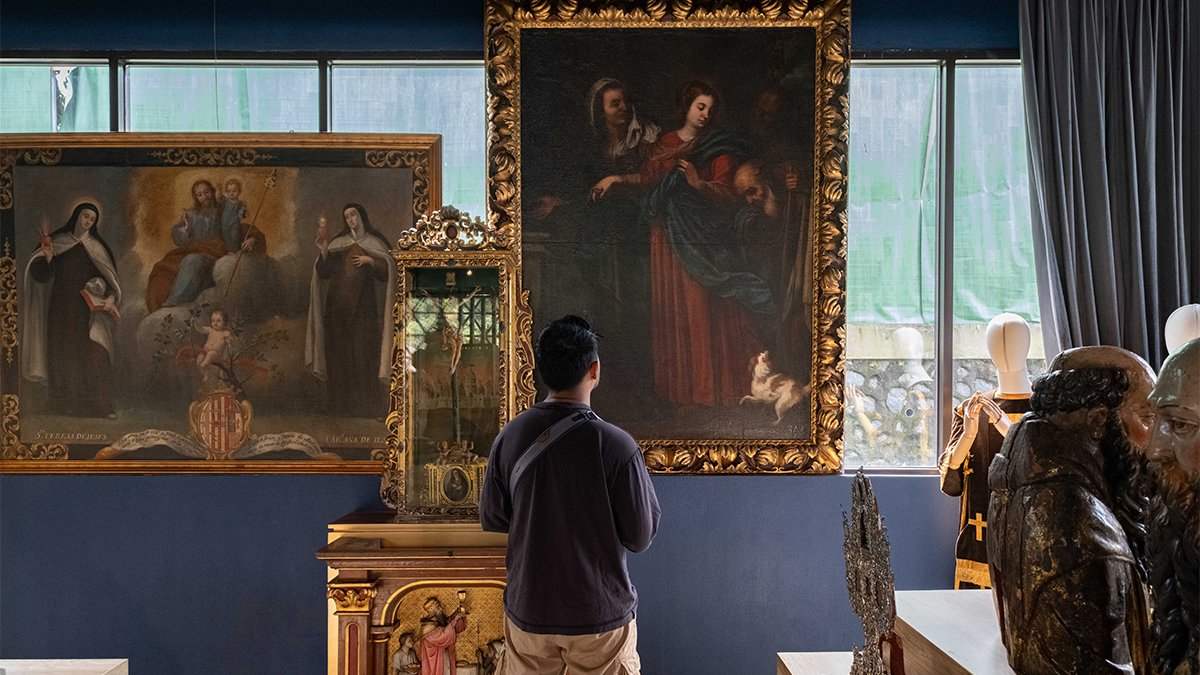
(SPOT.ph) In a quiet corner of Antipolo lies Museo P. Lhuillier, a new museum carving out a modern, unexpected space for centuries of European art, culture, and religious artifacts. It’s an hour or two away from most spots in Metro Manila, depending on whether traffic is bad or really bad. This new cultural landmark isn’t quite your quick lunch break detour, but it’s perfectly positioned for a relaxed weekend day trip up in the mountains.
What’s Inside Museo P. Lhuillier?
Museo P. Lhuillier showcases Ambassador Philippe J. Lhuillier’s extensive collection of European antiques, religious relics, and culturally significant memorabilia, built through his decades of diplomatic service. It’s the second establishment dedicated to the ambassador’s personal collection, with the first being Palacio de Memoria, housed in a beautifully restored pre-war mansion in Parañaque. Now, Antipolo has its own hub—and it’s a bigger, more extensive one, with six separate galleries, plus a small chapel.
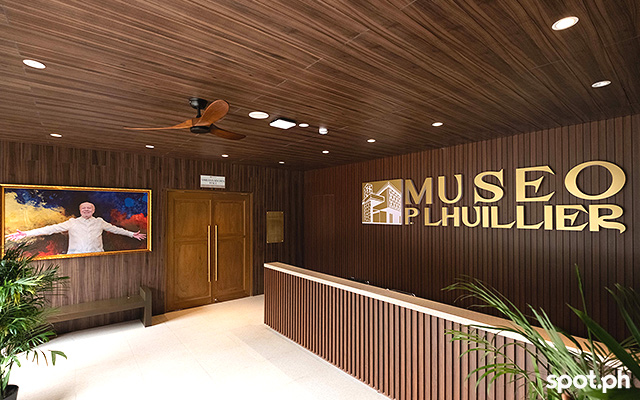
Click to Enlarge
Museo P. Lhuillier is the second establishment dedicated to the ambassador’s personal collection, with the first being Palacio de Memoria. Photo: Majoy Siason
Much of Museo P. Lhuillier is a testament to the ambassador’s love for the arts and religion. He acquired many of these pieces by scouring flea markets and old churches in Europe. And while the resulting galleries are vast and diverse, the museum ultimately reflects his enduring devotion to spiritual heritage, particularly highlighting iconography of Madonna and Child as well as Sta. Rosa de Lima (Rose of Lima).
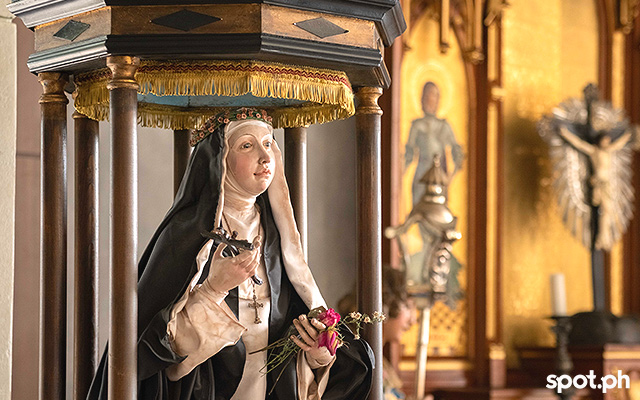
Click to Enlarge
A figure of Sta. Rosa de Lima, the patron saint of embroiderers, gardeners, and florists, and Peru, South America, and the Philippines. Ambassador Lhuillier is a long-time devotee. Photo: Majoy Siason
The devotion is perhaps most profoundly felt inside the Kapilya de Santa Rosa de Lima, the museum’s intimate chapel. Here, you’ll find a reliquary of Sta. Rosa de Lima, bearing the saint’s tiny bone fragment. Antique pieces adorn the sanctuary, while 12 paintings depicting the Stations of the Cross fill the far wall. Natural light creates a serene space for prayer and contemplation.
Inside the main building, the first stop is Ambassador’s Hall on the ground floor. This gallery chronicles the life, career, and family of Ambassador Lhuillier, starting from their French roots (huillier translates to “oil maker”) and concluding with photographs of the ever-growing clan today.
Click to Enlarge
PJL lenticular art (AJ Saño and Laura R. Aguila) and Cebuana Lhuillier branch replica (Romher Jude Quilantang). Photo: Majoy Siason
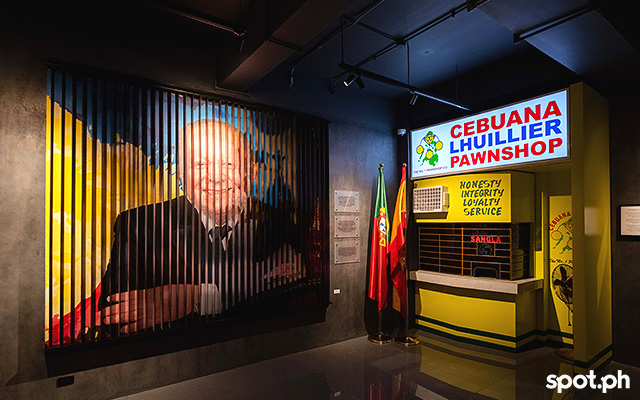
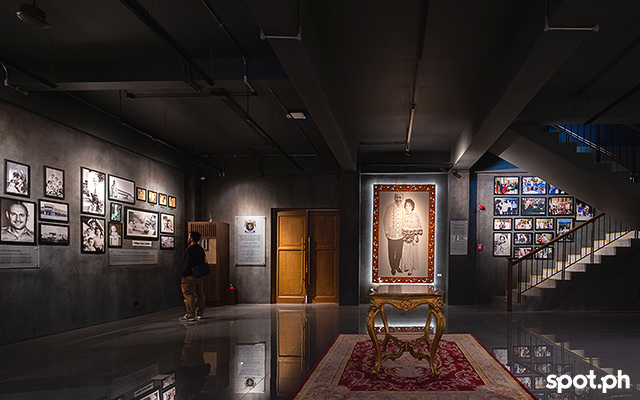
The Ambassador’s Hall is filled with photographs of PLJ’s early years, diplomatic service, and career and family milestones. Photo: Majoy Siason
Adding a pop of bright color is a replica of a vintage Cebuana Lhuillier branch, a fascinating peek at what the iconic pawnshop looked like in its early days. Elsewhere in the Hall, a dedicated wall highlights the diplomat’s career as one of the Philippines’ longest-serving ambassadors, with postings in Italy, Albania, San Marino, Portugal, and (currently) Spain.
The Hall also features a handful of sentimental family relics, including a door assembled from wooden panels originally sourced from the first office shared by the ambassador and his father in Magallanes. A mixed-media art piece featuring Lhuillier and his wife, Edna, is prominently displayed, complemented by a panel sharing the start of their relationship, sweetly titled “Love at First Sight.”
Centuries-old European art and artifacts
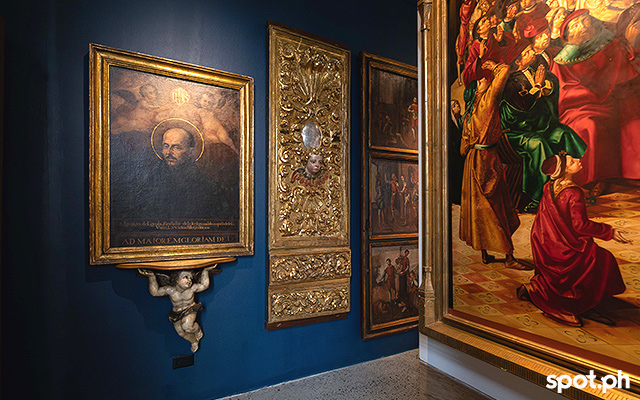
From the Ambassador’s Hall, a staircase leads visitors to the second floor, where the Religious Area awaits. This gallery is overflowing with religious figures, paintings, and antiquities collected from all over Europe. It ranges from detailed depictions of angels and saints and variations of the Madonna and Child to large-scale church adornments such as antique bells and stair pieces.
Click to Enlarge
The gallery is filled with religious art pieces, including this depiction of St Ignatius of Loyola, a Spanish Catholic priest and theologian. Photo: Majoy Siason
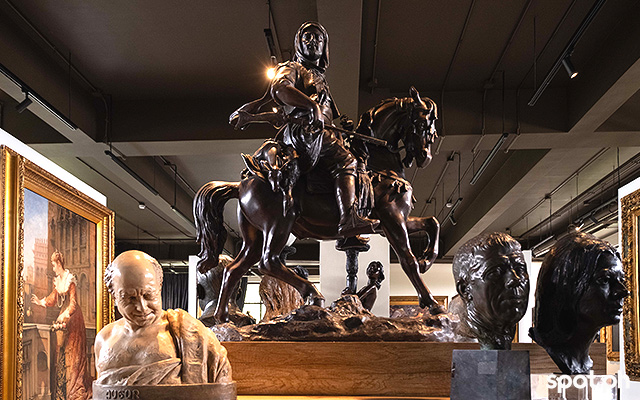
In the Bronze and Paintings section, art is front and center. The gallery is anchored by bronze sculptures, notably the “Arabian Horseman” by artists Alfred Barye and Emile Guillemin. Alongside these pieces hang paintings, including a portrait of King Philip II of Spain—the Philippines’ namesake! This room bridges the museum’s spiritual focus with European fine art.
Click to Enlarge
The museum features an impressive collection of bronze sculptures, the largest of which is the “Arabian Horseman”. Photo: Majoy Siason
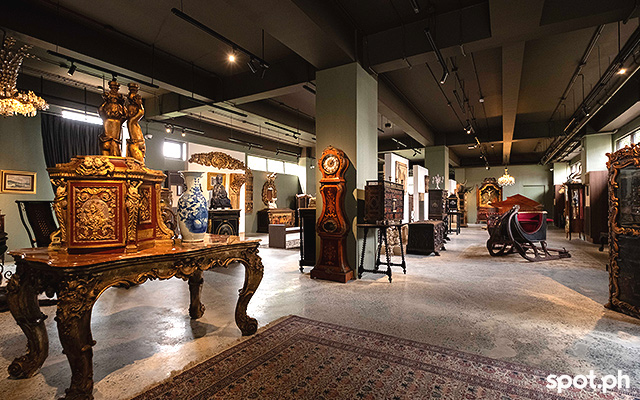
In the Furniture gallery, the museum showcases exquisitely detailed housewares, including large chests of drawers with intricate carvings, many of which depict specific themes or scenes, such as hunting. Household items like elaborate slippers, vintage chairs, old instruments, and gilded candlesticks fill the room, along with taxidermies, although the museum notes this does not reflect a pro-hunting stance.
Click to Enlarge
the Furniture gallery, the museum showcases exquisitely detailed houseware, including large chests of drawers with intricate carvings; Along with other household items like elaborate slippers, vintage chairs, old instruments, and gilded candlesticks that fill the room. Photo: Majoy Siason
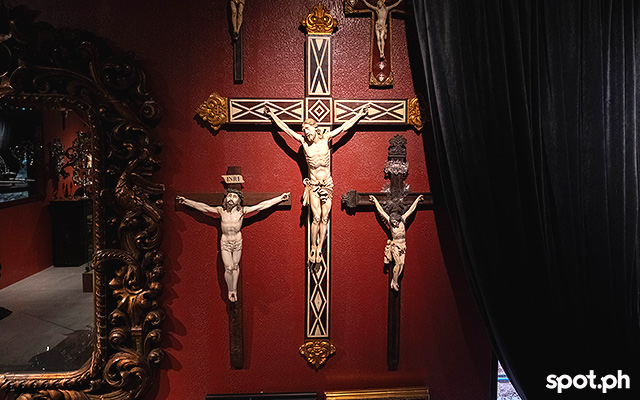
The final major gallery is the Ivory and Silver section, which demonstrates the ambassador’s global reach in collecting. The museum confirms that all the ivory pieces displayed are antique, dating from the pre-1930s. Here, you will encounter an abundance of ivory crucifixes, a nod to the museum’s devotional core. Rare silver artifacts also feature prominently, from precious silver crowns to delicate silver galleons. This gallery showcases an unexpected blend of influences, with many pieces sourced from East Asia and some even from Africa.
Click to Enlarge
A beautiful collection of ivory crucifixes are housed in the Ivory and Silver gallery. Although many of the ivory pieces in the room are from Asia or Africa, the large, prominently displayed crucifix above is from Italy. Photo: Majoy Siason
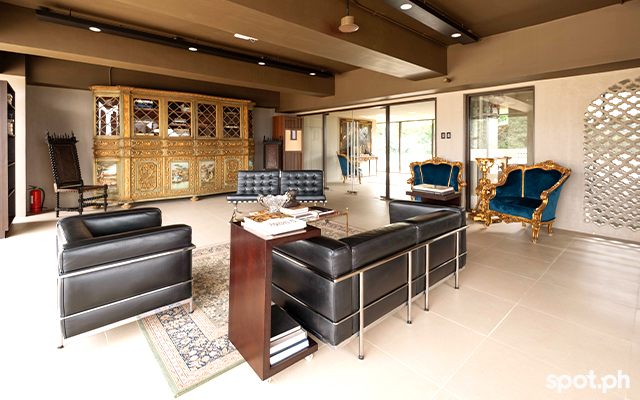
The museum tour culminates on the third floor in the Library and Lounge. Designed as a cozy, intimate space, the room invites guests to sit and relax after an hour or two of exploring the galleries.
Click to Enlarge
The last part of the museum is the Library and Lounge found at the third floor. Photo: Majoy Siason
The collection here is modest yet thoughtfully curated, a mix of glossy coffee table books and weathered Spanish and European-language volumes. Some titles are housed in an old cabinet adorned with faded, hand-painted icons—admittedly, the craftsmanship appears so delicate that this author hesitated to even reach for a book. But regardless, it’s still a quiet area to pause and get off your feet for a bit before leaving the sanctuary of Museo P. Lhuillier.
The real highlights, however, are the views beyond the lounge’s sliding glass doors. Stepping onto the roof deck—the first of two planned for the museum—you’re met with sweeping vistas of this mountain perch. Look one way for the hazy, rhythmic cityscape of Metro Manila, where our guide points out the distant Mandaluyong silhouette. Swing to the other side of the rooftop, and you’re grounded back into the lively, small-city bustle of downtown Antipolo.