

Camille Lhuillier-Albani’s earliest memories of her father are not of boardroom meetings or diplomatic receptions, but of quiet Sundays spent wandering flea markets and art galleries across Europe. Growing up in Rome, where her father, Ambassador Philippe J. Lhuillier, held his first ambassadorial post, these weekly rituals became formative moments—lessons in curiosity, beauty, and faith that would later shape a museum born from decades-long practice of collecting.
“I actually grew up with the majority of my life with my parents when my dad was stationed in Rome, Italy,” said Camille, now the general manager of Museo P. Lhuillier, which is dedicated to the patriarch’s collection. “Every Sunday after mass, we would go to flea markets or art galleries. That was a memory I shared with him in particular.”
Those flea markets, whether tucked away in Italian towns or sprawling across Paris, were where a young Camille first saw her father’s instinctive relationship with art take shape. Long before he had the means to acquire major pieces, collecting began with small trinkets gathered during his travels between France and the Philippines. “When he was younger, it started with small things,” she recalled. “Then when he was finally in office in Italy, he had a little more budget, so he would go for larger items.”
By then, the family home itself had become a living archive. “Even in our house, it was mostly filled with these items already,” she said. “It was just part of our lives.” That passion was never imposed, but gently passed down. Camille is one of seven siblings, each of whom gravitated toward different corners of the art world. “We all kind of collect in our own way,” she shared. “One of my brothers collects modern pieces, my sister is more eclectic. I’m probably a mix of traditional and modern.”
Acts of faith
At the heart of her father’s collection is faith. Deeply religious, he has always been drawn to sacred imagery—crucifixes, saints, and especially mother-and-child iconography. “He carries with him a broken rosary that he’s had since he was six or seven years old,” Camille revealed. “So when he sees these pieces, it resonates deeply within him. It’s not just about religion—it’s about family.”
There is no strict theme, no checklist when it comes to his collecting. “He likes what he likes,” Camille said simply. “If something grabs his attention, that’s what he goes for—even if sometimes I’m like, ‘Dad, why did you get that?’ And he’ll just say, ‘It looks interesting. It looks fun.’”

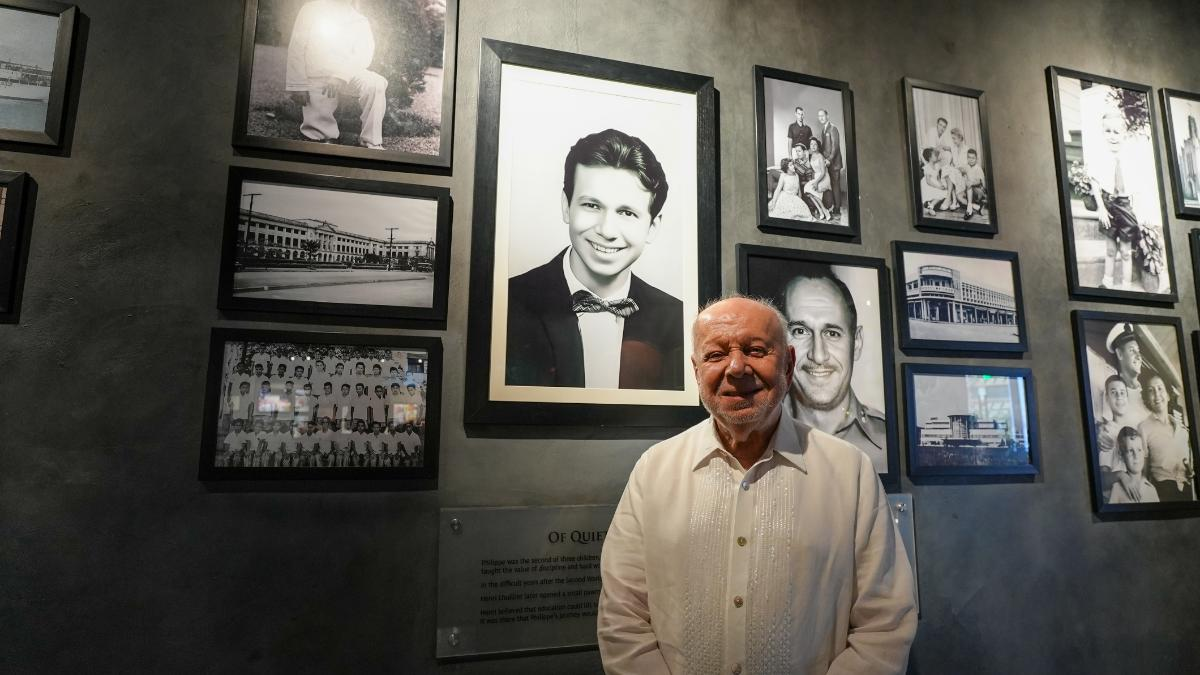
Ambassador Philippe J. Lhuillier at the Ambassador’s Hall, a space dedicated to his life, legacy, and decades of service.. Photo: Museo P. Lhuillier
It was this deeply personal relationship with objects, and the stories behind them, that inspired Camille and her sister, Angelique Lhuillier Miranda, to bring the museum to life. Initially, it was meant to be a private family project. In July last year, on their father’s 80th birthday, they opened a portion of it, beginning with the chapel and a hall dedicated to his life.
“I really feel that the museum is not just his collection,” Camille said. “It is his life.” The space chronicles not only the items he gathered, but the people he met, helped, and walked alongside throughout decades of diplomacy and service. “It was about wanting to share with the world this man and his amazing life.”
“Throughout his diplomatic career in Italy, Albania, San Marino, Portugal, and now Spain, my dad has championed the welfare of overseas Filipinos, strengthened bilateral relations, and elevated our culture abroad,” said Jean Henri Lhuillier, president and CEO of Cebuana Lhuillier. “Seeing his impact reflected in this museum is deeply meaningful.”
Collection across decades
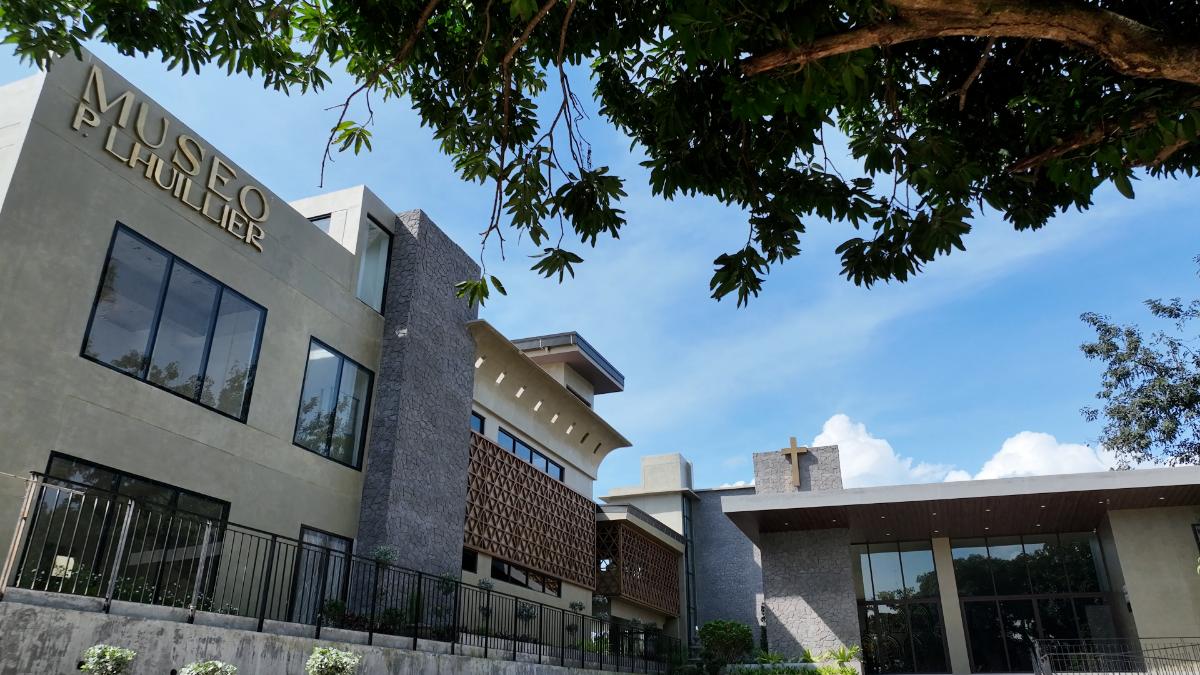
The museum’s industrial structure is softened by a wooden solihiya-inspired lattice—a deliberate nod to Filipino craftsmanship. “The items may be very European,” Camille explained, “but we wanted the building to be grounded in the Philippines.”
Spread across four levels, the museum houses over a thousand pieces—religious artifacts, paintings, sculptures, and furniture—most collected over several decades, many acquired for modest sums long before their historical value became widely recognized.
Click to Enlarge
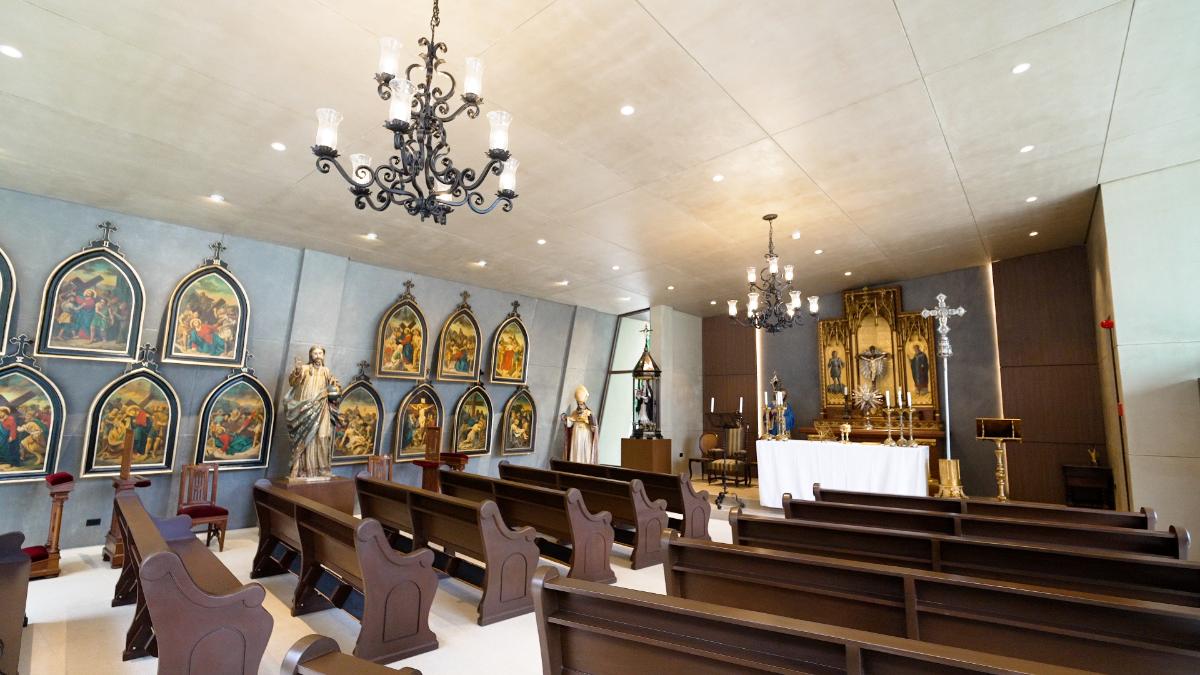
The Kapilya de Santa Rosa de Lima serves as a quiet sanctuary for devotion and contemplation.. Photo: Museo P. Lhuillier
One of the most significant pieces sits in the chapel: a statue of Santa Rosa de Lima, which Camille describes as deeply intertwined with her family’s spiritual life. “We’ve had this statue in my dad’s private museum at home, and it has had miracles within our family—health, personal things people pray for,” she said. Moving it to the chapel in Antipolo was intentional. “We wanted it to be a place where people could come and pray.”
That spirit of openness mirrors the way Ambassador Lhuillier has lived his life. A businessman and diplomat ahead of his time, he is equally known for his quiet philanthropy. “My dad is never one to talk about it,” Camille said. “But when I was growing up, he would stay in his office until nine or ten at night just seeing people—hearing their problems and trying to fix them.”
Whether helping overseas Filipino workers in Europe or supporting scholars and feeding programs back home, service has always guided his work. “His mission in life is to help,” she said, her voice warm with pride.
A space for reflection
As the museum prepares to open to the public with guided tours and future plans for a café, talks, and rotating exhibitions, Camille sees it as more than a repository of art. It is an invitation to reflect on faith, on service, and on the many ways Filipinos can make an impact beyond borders.
“Many of these pieces have been carefully kept for years,” Ambassador Lhuillier shared during the museum’s launch last December. “It has long been my hope to make these pieces accessible to the Filipino public. My hope is that Museo P. Lhuillier becomes a place of reflection and discovery, where visitors can connect with stories of faith, heritage, and global tradition.”
Click to Enlarge
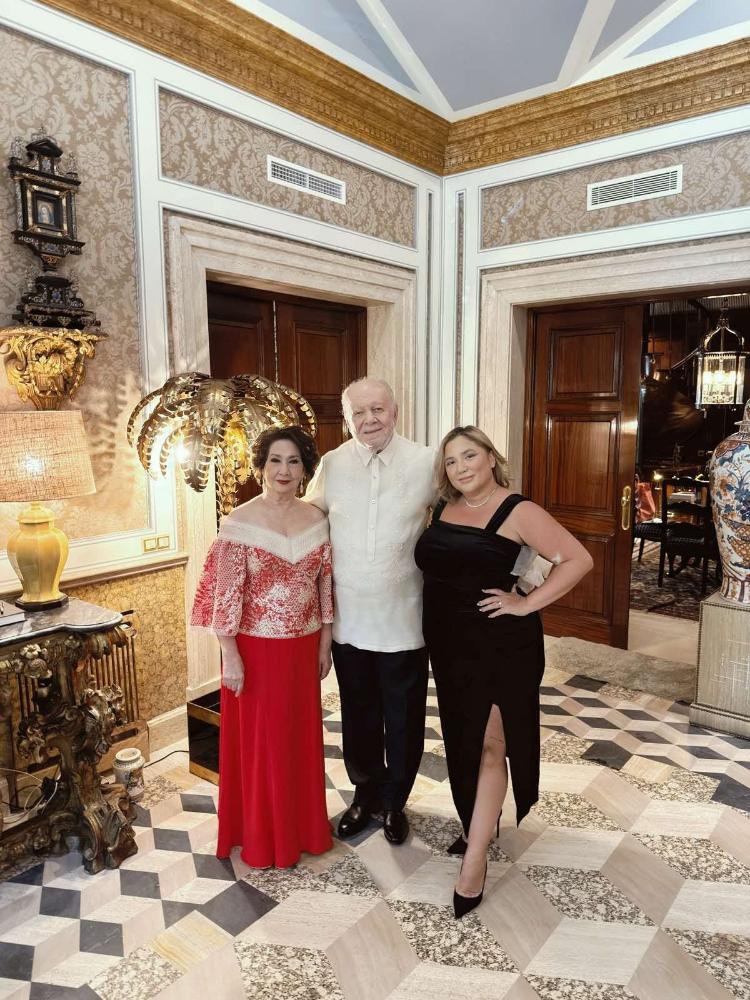
Señorita Edna Lhuillier, Amb Philippe Jones Lhuillier, and Camille Lhuillier-Albani. Photo: Museo P. Lhuillier
“It’s really important for us to share that space with people,” added Camille. “To show that through a life of diplomacy, through collecting, through faith, there are many ways to help your country—even outside of it.”